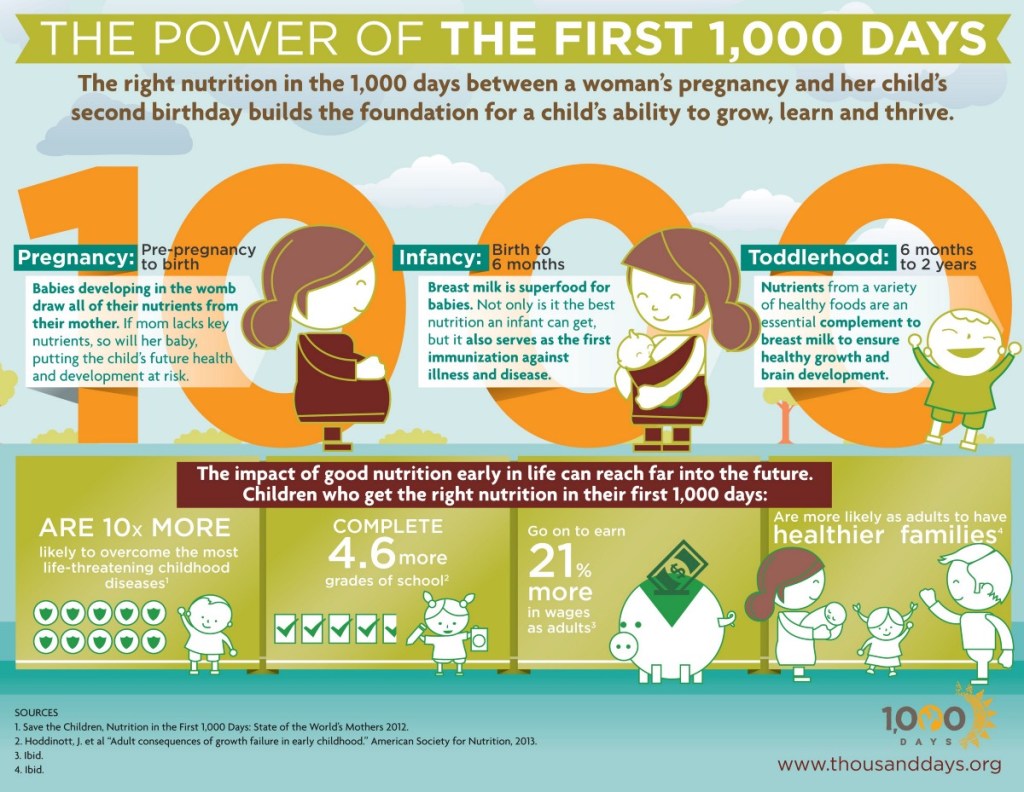
The first 1,000 days of life – the time spanning roughly between conception and one’s second birthday – is a unique period of opportunity when the foundations of optimum health, growth, and neurodevelopment across the lifespan are established.
How well or how poorly mothers and children are nourished and cared for during this time has a profound impact on a child’s ability to grow, learn and thrive. This is because the first 1,000 days are when a child’s brain begins to grow and develop and when the foundations for their lifelong health are built.
Research in the fields of neuroscience, biology and early childhood development provide powerful insights into how nutrition, relationships, and environments in the 1,000 days between a woman’s pregnancy and a child’s 2nd birthday shape future outcomes.
Nutrition, in particular, plays a foundational role in a child’s development and her country’s ability to prosper. Poor nutrition in the first 1,000 days can cause irreversible damage to a child’s growing brain, affecting her ability to do well in school and earn a good living—and making it harder for a child and her family to rise out of poverty. It can also set the stage for later obesity, diabetes, and other chronic diseases which can lead to a lifetime of health problems.
Studies show that countries that fail to invest in the well-being of women and children in the first 1,000 days lose billions of dollars to lower economic productivity and higher health costs. It is why several of the world’s leading economists have called for greater investments in the nutrition and well-being of mothers, babies, and toddlers as a way to create brighter and more prosperous futures for us all.
Nutrients and Development
FETAL DEVELOPMENT
The benefits of good nutrition start before birth, during fetal development. The fetus will take needed nutrients from the mother’s body, even if doing so leaves the mother deficient. If the mother’s body does not have enough nutrients to give, however, the fetus has no way of getting the required nutrients. Brain development can suffer during the fetal period if the mother is malnourished.
INFANT AND TODDLER DEVELOPMENT
Meeting nutrient requirements is important throughout the lifespan but, the proper nutrients are especially important to infants and toddlers — more than for any other age group. Tremendous growth and development occurs in infants and toddlers. Approximately 25 percent of an infant’s caloric intake is utilized for growth. At one year old, the average infant has increased in length by 50 percent and by two years old, a toddler is approximately 75 percent taller than at birth.
Malnourishment
Nutrient intake before birth and during the first few years of life greatly affects overall health, growth and cognitive ability. Undernourishment can stunt growth and cause developmental delays. Cognitive development is the first to suffer. When the body is not receiving enough nutrients it goes into survival mode and dedicates available nourishment to survival, then growth, and lastly cognitive development. Detrimental effects from malnourishment may or may not be reversible. Nutrition intervention is most successful when applied during the first few years of life. After the first few years of life, nutrition intervention, although important, may have reduced benefits.
The first thousand days of a baby’s life are likely to determine the rest of her life-whether she grows up to be healthy or not, both physically and emotionally. ~ Madeleine M.Kunin
Nutritional Requirements
Iron
A child is born with a certain level of iron in their body but it naturally starts to deplete between 4-6 months. So, it is necessary to feed the baby foods which are high in iron. In case the baby doesn’t get enough iron then deficiency occurs and due to which irritability, impaired social behavior, learning disabilities, depression occurs in the later stages of life or result in other side effects. When you have resolved the issues of iron during the first 1000 days, cognitive effects can last into adulthood. So, it is important to focus on iron intake from pregnancy until the age of two. During the first 280 days, i.e. when the child is inside the mother’s womb and for the next 180 days, when the child is on mother’s milk – daily adequate iron intake has to be maintained by the mother. In the next 180 days when the child shifts to solid food gradually, parents can start giving their baby boiled and mashed apples, spinach (palak saag) with rice, boiled raw banana (kaccha kela) with rice to maintain the daily dose iron.
Protein
One can say the most important nutrient during the first 1000 years of human’s life is protein. According to World Health Organization (WHO) standards when there is protein deficiency in the first 1000 days (often observed in developing countries) there is inadequate mental and physical growth and development. During this period the infant doubles its birth-weight during the first 3-4 months of life, therefore, protein requirements during early infancy, per unit of body weight, are much higher than that of older infants, children, and adults. As an example, young infant’s needs per unit of body weight are more than 2x higher than that of a weight lifter who takes protein supplements for muscle build-up. During the phase when the child is inside the mother’s womb and during the lactation, mothers have to ensure that she is taking boiled eggs, chicken, fish, paneer, milk and other dairy products regularly. When the child shifts from mother’s milk to solid food, parents need to increase the child’s protein intake by giving them milk every day, along with that boiled eggs, mashed paneer, soya bean, well boiled and mashed chicken.
Calcium
Calcium is good for the bones, healthy teeth. The nutrient also promotes healthy teeth, nerves, muscles, and blood clotting function. In fact, calcium deficiency is one of the leading causes of maternal and child morbidity and mortality. A review published in the journal Food and Nutrition Bulletin has shared that adequate calcium is important to meet the increasing physiological requirements of pregnant and lactating women and support growth in infants. The World Health Organization has recommended an additional intake of 1.5–2.0 g of elemental calcium/day from 20 weeks of gestation until delivery to reduce the risk of preeclampsia, particularly in women from regions of low calcium intake. Some of the best sources of calcium for kids are dairy products like cow or buffalo milk , paneer, soya milk, almond milk, spinach, sweet potato, chicken, eggs, jaggery (gur).
Iodine
Iodine is vital for brain development and for the normal metabolism of cells. Human body needs iodine for normal thyroid function, and for the production of thyroid hormones and lack of iodine, particularly in kids could impair their brain function.
Folate
Necessary for the brain and spinal cord, folate is a key nutrient during pregnancy and after birth. Sources of folate are eggs, spinach, beets, lemons, and grapes. Also, you need to take prenatal vitamins with them.
Long-Chain Polyunsaturated Fatty Acids (like DHA)
DHA, short for docosahexaenoic acid, is one of two key long-chain omega-3 fatty acids. DHA is major structural fat in the brain and retina. In the early 1000 days children need DHA primarily for healthy development brains’ intellectual, motor cortex (essential for good planning & strategy), emotional, and communication skills. Sources of DHA are cooked soya bean, water soaked walnuts, boiled eggs and spinach.
Vitamin A
Required for the development of vision, cells and major organs. Carrots and spinach are excellent sources of Vitamin A.
Other Nutrients
Vitamin B12, vitamin B6, vitamin D, vitamin K, selenium, copper, zinc, choline, and protein is also required for a healthy baby.
Recommended Food Intake for first 1000 Days
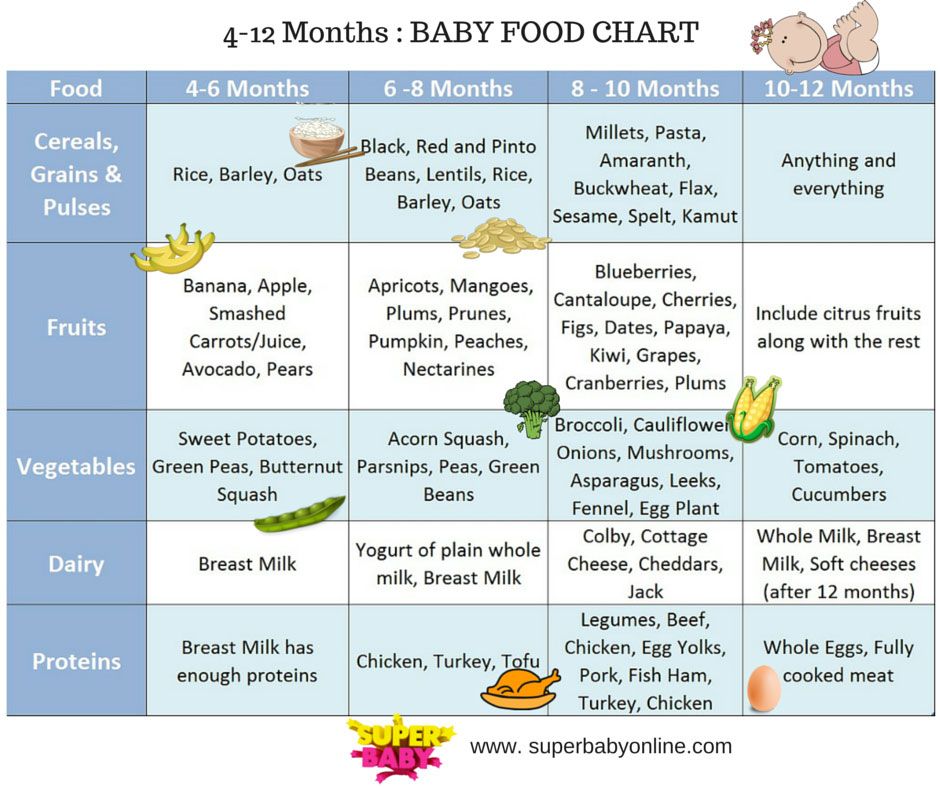
0 – 4 to 6 Months: Infants should only be fed breast milk or iron-fortified formula for the first 4 to 6 months of life. Newborn breastfed infants should be fed on demand or about 8 to 12 times a day. Newborn infants fed iron-fortified formula should be fed 2 to 3 ounces of formula, 6 to 8 times a day. Once a baby reaches about 2 months old the amount of feeding times a day decreases, while the amount fed at each meal increases. Breasted babies will determine how much to eat per feeding. After 2 months of age, bottle fed babies should be offered a bottle 4 to 6 times a day or more often if the baby demands it and will gradually increase to eating 6 to 8 ounces of formula per feeding.
4 to 6 Months: At 4 to 6 months of age, infants have higher energy requirements and become capable of swallowing simple foods. Feed babies at this age baby cereal, mixed with breast milk or formula, twice a day. Start with 2 tablespoons of dry cereal mixed with enough breast milk or formula to hydrate the cereal. Gradually increase the amount of cereal to 4 tablespoons, mixed with breast milk or formula.
6 to 8 Months: At between 6 to 8 months of age, start introducing new foods such as mashed fruits and vegetables. Gradually introduce one new food every three days. Feed four – 2 to 3 tablespoon servings of fruits and vegetables over the course of a day, divided into 3 meal times. Continue to breast or bottle feed 3 to 5 times a day. Between meals, limited amounts of appropriate age-based finger foods, such as baby biscuits can be offered.
8 to 12 Months: Between 8 and 12 months of age, infants should breast or bottle feed 3 to 4 times a day. Fruit and vegetable intake should increase to a 3 to 4 tablespoon size serving four times a day. In addition, one – 3 to 4 tablespoon serving of pureed meat should be fed a day. Gradually introduce meats into the diet, one at a time, once a week. Egg yolks can be fed as a meat replacement 3 to 4 times a week.
1 to 2 Years: Once a baby reaches one year old, solid foods should make up the majority of caloric requirements. After one year old, formula should be discontinued and water placed in the bottle if necessary. Breastfed babies can continue to breastfeed along with solid foods. The types of solid foods should be varied to include whole grains (wheat bread and oatmeal), dairy products (whole milk, cheese and yogurt), fruits and vegetables and meat. Toddlers tend to eat small amounts per meal and require 4 to 6 feedings a day, meaning they should be fed 2 to 3 snacks a day, in addition to meals.
2 to 3 Years: Children between the ages of 2 and 3 years old require between 1,000 and 1,400 calories a day, which amounts to approximately 4 ounces of whole grains, 1-1/2 cups vegetables, 1-cup fruit, 2 cups of dairy and 3 ounces of meat or other protein sources such as beans. Children at this age tend to do well having their caloric requirements divided up between three meals and 2 to 4 snacks a day.
Takeaways
Understanding the importance of nutrition during the first 1000 days period is the first step to making a difference to a child’s health. Using the above feeding guidelines, caretakers and educators can help create healthy habits in children that will follow them into adulthood.
All moms are welcome to share their feedback and tips with us! 🙂
Also read : https://aishwaryasmissiontoimprove.health.blog/2020/02/01/importance-of-exclusive-breastfeeding
Found it useful?
Leave your thoughts and share it with your fellow moms by clicking below.

Happy Parenting!
 Women and Child Health